Eruption Cysts: A Parent’s Guide to Tooth Eruption Bumps
Understanding Eruption Cysts
If you’ve noticed a soft bump on your child’s gums, it’s natural to feel a bit concerned. These small changes in your child’s mouth can raise questions, especially during the teething or tooth eruption stages. In this post, our Brisbane Paediatric Dentist will help you understand what eruption cysts are, why they appear, and what signs to look out for. Understanding what’s normal and when to seek advice can make a big difference in how you support your child’s dental health.
What Is an Eruption Cyst?
An eruption cyst is a small, fluid-filled sac that can form on the gums right before a tooth comes through. It often looks like a soft, round bump and might be clear, bluish, or slightly purple in colour. These cysts are most common in children, especially when baby teeth or adult teeth are starting to break through the gums. While they might look unusual, they’re usually harmless and tend to go away on their own once the tooth pushes through.
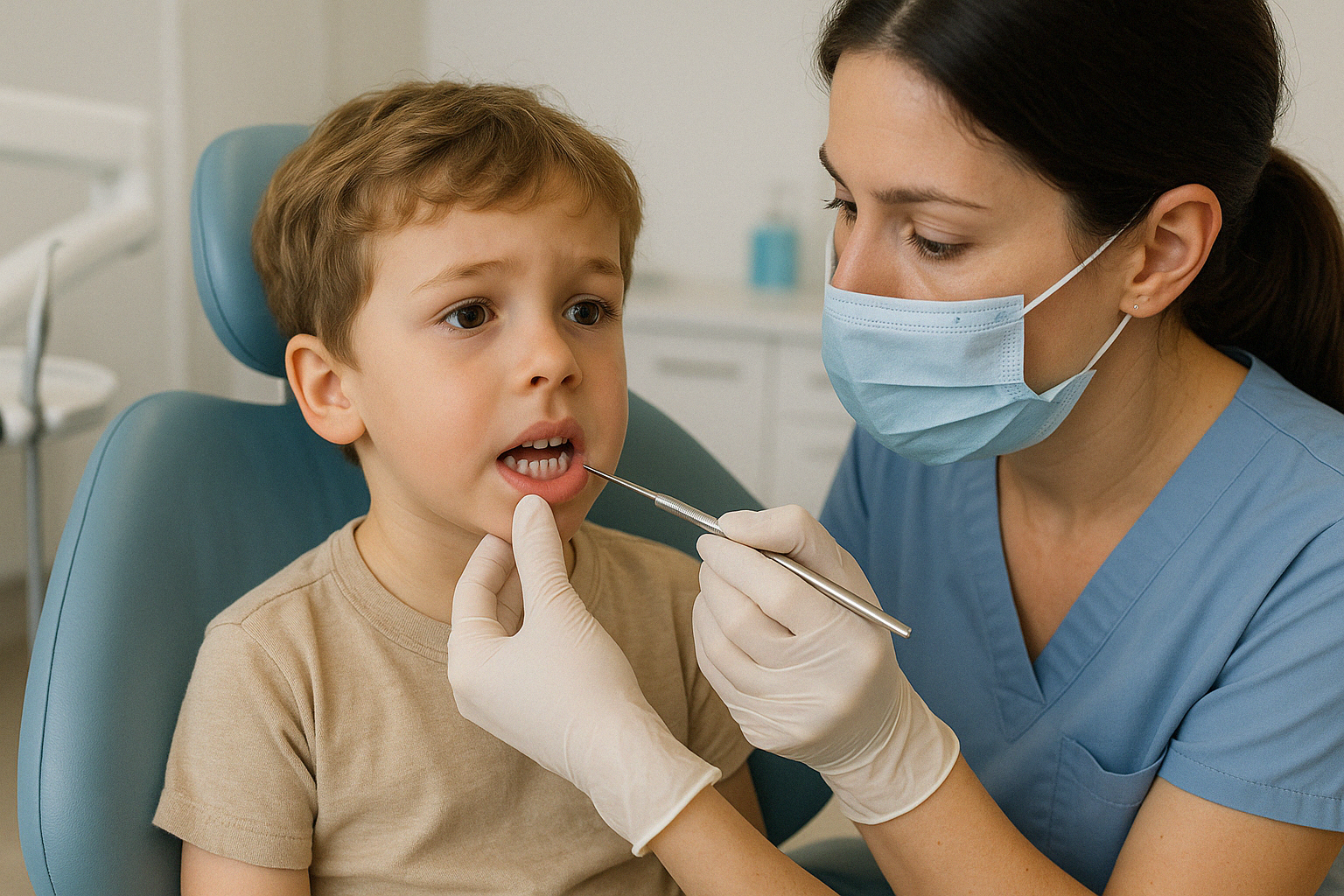
What Causes Eruption Cysts?
According to our kids’ dentist, while the exact cause of eruption cysts isn’t always known, several factors are thought to contribute to their formation in children, including:
Natural Tooth Eruption
As a tooth begins to break through the gums, a small pocket of fluid can build up over it. This pressure can make the gum appear swollen or form a soft, bluish bump. It’s a natural response and doesn’t mean anything is wrong. In most cases, the fluid goes away on its own once the tooth fully comes through.
Fluid Accumulation During Tooth Eruption
As a tooth starts to push its way through the gum, fluid can sometimes collect between the tooth and the gum tissue above it. This buildup creates a small, soft bump, which is what we call an eruption cyst. In most cases, the fluid goes away on its own once the tooth fully erupts.
Minor Gum Trauma
A small bump or injury to the gums—like from a fall, playing, or accidentally biting something hard—can sometimes trigger an eruption cyst. The trauma may cause swelling or fluid to build up around a tooth that’s about to come through. These cysts usually heal well and don’t cause long-term problems. It’s still a good idea to keep an eye on the area and check in with your dentist if you’re unsure.
Crowded Teeth or Delayed Eruption
In situations where teeth are crowded or slow to erupt, added pressure in the area can increase the likelihood of a cyst forming. This is more likely in older children with mixed dentition. Your dentist can help assess whether crowding might be a concern.
Lack of Space for the Tooth to Emerge
Sometimes, there just isn’t quite enough room in the mouth for a new tooth to come through easily. When this happens, the tooth might push harder against the gum, causing irritation and fluid buildup. This can lead to an eruption cyst forming over the area.
Genetic Predisposition
Some children may simply be more likely to get eruption cysts due to inherited traits. Just as we inherit eye or hair colour, we can also inherit certain dental patterns. If close family members had eruption cysts as children, there’s a chance your child might, too. It’s usually nothing to worry about and part of normal development for some kids.
Unknown Causes
Sometimes, eruption cysts appear without any clear cause. Even in perfectly healthy gums, they can form spontaneously, and they often go away on their own without treatment.

What Do Eruption Cysts Look Like?
Colour: Eruption cysts are often bluish, purplish, or translucent in appearance. The colour comes from the fluid or sometimes a small amount of blood trapped under the gum tissue. Size: They are typically small and usually measure less than 1.5 centimetres in diameter. Even though they’re small, they can still look quite noticeable on a child’s gums. Texture: Eruption cysts feel soft and slightly squishy, almost like a tiny water balloon. They are not hard or firm, which helps distinguish them from other types of bumps. Location: These cysts usually form right over the area where a tooth is getting ready to come through. They are most commonly seen near the molars, especially during the early years of tooth eruption.
Are Eruption Cysts Painful or Serious?
Eruption cysts are usually painless and not a cause for concern. In most cases, they don’t bother children at all and simply sit over the tooth as it gets ready to come through. Sometimes, a child might feel a bit of tenderness in the area, especially if they’re chewing or brushing near the spot, but this discomfort is usually mild and short-lived. Most eruption cysts go away on their own once the tooth breaks through the gum. They don’t need treatment and often clear up without any trouble. In rare cases, a cyst may become infected or cause a slight delay in the tooth coming through. If the area looks very swollen, red, or your child seems to be in pain, it’s a good idea to have it checked by a dentist.
When Should You See a Dentist for Eruption Cysts?
While eruption cysts are usually harmless and clear up on their own, there are times when it’s best to have a paediatric dentist take a closer look for peace of mind and proper care.
Persistent or Severe Pain
If your child is experiencing ongoing or intense pain around the cyst, it’s a good idea to book a dental visit. Pain that doesn’t settle may be a sign of pressure, infection, or another issue that needs attention.
Swelling in Gums or Jaw
Noticeable swelling in the gums or jaw area, especially if it seems to be spreading or getting worse, should not be ignored. A dentist can check to see if the swelling is linked to the eruption cyst or something else.
Fever Without Other Causes
If your child has a fever and there’s no clear reason, it could be related to an infection in the gum or cyst area. It’s worth having it checked to rule out any dental cause.
Difficulty Eating or Speaking
When a cyst starts to interfere with your child’s ability to eat or speak comfortably, it’s time to seek advice. A dentist can help relieve discomfort and check that the tooth is erupting properly.
Prolonged Bleeding
A little bleeding can sometimes happen if the cyst is irritated, but bleeding that lasts or keeps coming back should be looked at. This could be a sign that the gum tissue needs care.
Cyst Persists Beyond a Few Weeks
Most eruption cysts go away within a few weeks as the tooth comes through. If the bump is still there after that or seems to be growing, it’s best to have it assessed by a dentist.
Signs of Infection
Redness, warmth, pus, or a bad smell coming from the area may mean the cyst has become infected. In this case, prompt dental care can prevent further issues and help your child feel better quickly.
How Are Eruption Cysts Treated?
Treatment for eruption cysts depends on how the cyst is behaving and whether it’s causing any discomfort, and your child’s dentist will recommend the best approach based on their individual needs.
Observation (Watchful Waiting)
In most cases, no treatment is needed at all. The dentist may simply keep an eye on the cyst over time, as it usually goes away naturally once the tooth comes through.
Pain Management
If the cyst causes mild discomfort, the dentist may suggest child-safe pain relief, such as paracetamol. This can help keep your child comfortable while the tooth continues to erupt.
Cold Compress
A cold pack gently applied to the outside of the cheek can help reduce any swelling and ease tenderness. It’s a simple, soothing option that can be used at home if your child is feeling uncomfortable.
Soft Diet
Offering soft foods can help prevent irritation to the area where the cyst is located. This can make eating more comfortable while the gums are sensitive.
Surgical Intervention
In rare cases where the cyst is large, persistent, or interfering with the tooth’s eruption, a dentist may recommend a small surgical procedure. This involves gently opening the cyst to help the tooth come through more easily.
Aspiration
If the cyst contains a large amount of fluid or appears infected, the dentist might remove some of the fluid with a small needle. This helps relieve pressure and allows the area to heal more comfortably.
Laser Treatment
Some dentists may use gentle laser technology to open the cyst with minimal discomfort. This option can help speed up the healing process and is often well-tolerated by children.
Can Eruption Cysts Be Prevented?
Eruption cysts can’t always be prevented, as they are a natural part of the tooth eruption process for some children. However, keeping your child’s mouth healthy with regular brushing, dental check-ups, and a balanced diet can help reduce the chances of complications. Avoiding trauma to the gums and managing early signs of tooth decay may also help lower the risk. While you can’t control how every tooth comes through, staying on top of your child’s oral health can make a big difference.
Tips for Parents Managing Eruption Cysts at Home
Keep the area clean with gentle brushing: Use a soft-bristled toothbrush and brush carefully around the cyst to keep the gums clean without causing irritation. Avoid hard or crunchy foods: Foods like nuts, crackers, or raw vegetables can put pressure on the cyst and cause discomfort, so stick to softer options for a while. Distract kids with soft, cool snacks: Chilled treats like yoghurt, smoothies, or applesauce can be soothing and easy to eat, helping relieve any tenderness in the gums. Watch for signs of infection: Keep an eye out for redness, swelling, pus, or a bad smell from the area, and contact your dentist if you notice anything unusual.
What’s the Difference Between an Eruption Cyst and an Eruption Haematoma?
While eruption cysts and eruption haematomas are closely related, they aren’t exactly the same thing — here’s how they differ:
Eruption Cyst
- A fluid-filled sac that forms over a tooth that’s about to erupt.
- Typically clear or translucent in appearance.
- Usually painless and resolves on its own once the tooth breaks through.
Eruption Haematoma
- A specific type of eruption cyst that contains blood is often caused by minor trauma to the gum.
- Appears dark purple, bluish, or even black due to the presence of blood inside the cyst.
- Still generally harmless but may look more alarming than a clear eruption cyst.
In simple terms: all eruption haematomas are eruption cysts, but not all eruption cysts are haematomas. The main difference is whether there’s blood inside the bump.
Final Thoughts
Eruption cysts are a normal part of many children’s dental development and are usually nothing to worry about. They might look unusual at first, but in most cases, they’re harmless and clear up on their own as the tooth breaks through. Still, it’s always okay to reach out to your dentist if something doesn’t look or feel right. A quick check can offer peace of mind and help keep your child’s smile healthy and on track.
Frequently Asked Questions
An eruption cyst is a fluid-filled sac that forms over a tooth that’s about to break through the gums. Inside, it contains a clear or pale-yellow protein-rich fluid and sometimes blood if there’s been minor trauma, giving it a bluish or purple hue. This mixture of fluid and blood is what causes the soft, dome-shaped swelling often seen in a child’s mouth during tooth eruption.
Yes, eruption cysts can bleed if they’re poked or irritated. These cysts often contain clear fluid, but minor trauma—like chewing on a teething toy—can cause blood to mix in, turning them a bluish or purplish colour. While this bleeding is usually harmless, persistent bleeding or signs of infection should be assessed by a dentist.
Eruption cysts can affect both baby (primary) and adult (permanent) teeth. They form when fluid collects over a tooth that’s about to break through the gums, regardless of whether it’s a primary or permanent tooth. While they are more commonly observed during the eruption of permanent teeth, they can also occur in infants and toddlers as their baby teeth come in.
Eruption cysts can form over multiple teeth at the same time, although this is uncommon. They typically appear as soft, bluish or purplish swellings on the gums and are most often associated with a single erupting tooth. However, in rare cases, such as bilateral eruption cysts, they can develop simultaneously over multiple teeth, as documented in clinical reports.
No, eruption cysts are not contagious and are not caused by infections. They are benign, fluid-filled sacs that develop over erupting teeth due to fluid accumulation between the tooth crown and the gum tissue. While they are generally harmless and resolve on their own, if an eruption cyst becomes painful, bleeds, or shows signs of infection, it is advisable to consult a dentist for appropriate management.
Eruption cysts typically appear 3–4 days before a tooth breaks through the gum and usually resolve on their own within a few days after the tooth erupts. In most cases, no treatment is needed, and the cyst disappears as the tooth emerges. However, if the cyst persists beyond two weeks, causes pain, or interferes with eating, it’s advisable to consult a dentist for evaluation.
Eruption cysts themselves typically do not cause bad breath. However, if a cyst becomes infected, it may lead to an unpleasant odour in the mouth. Persistent bad breath in children should be evaluated by a dentist to rule out any underlying issues.
Most eruption cysts are harmless and resolve on their own without the need for antibiotics. Swelling alone doesn’t indicate infection; antibiotics are only necessary if there are signs of infection, such as pus, increased redness, or fever. If you notice these symptoms, consult your child’s dentist for appropriate care.
If an eruption cyst bursts naturally, it’s usually not a cause for concern. Keep the area clean by gently rinsing your child’s mouth with water and maintain regular oral hygiene practices. Monitor the site for any signs of infection, like persistent swelling or discharge, and consult a dentist if these occur.
Normal teething symptoms include gum swelling, drooling, irritability, and a desire to chew on objects. In contrast, an eruption cyst presents as a soft, dome-shaped swelling on the gums, often bluish or purplish in colour, directly over a tooth that’s about to emerge. Unlike general teething discomfort, eruption cysts are localized and may appear suddenly as a distinct bump.
Yes, if an eruption cyst causes discomfort or delays tooth eruption, a dentist can perform a minor procedure called “unroofing” to release the fluid and assist the tooth in emerging. This is typically done under local anaesthesia and is a quick, straightforward process. However, most eruption cysts resolve on their own without intervention.
Helping Little Smiles Grow with Confidence
If your child has a bump on their gums or you’re unsure about what’s happening during teething or tooth eruption, we’re here to help make things clearer and more comfortable. Our team offers gentle, supportive care, along with sedation options such as laughing gas and sleep dentistry, to support your child through every stage of dental development. Sleep Dentistry Brisbane, as mentioned by Brisbane Dental Sleep Clinic, provides a relaxed and worry-free dental environment for patients. With flexible payment options like Humm and Supercare available, getting the right advice and treatment has never been easier. Call us today on 07 3343 4869 – your child’s healthy smile is just around the corner.